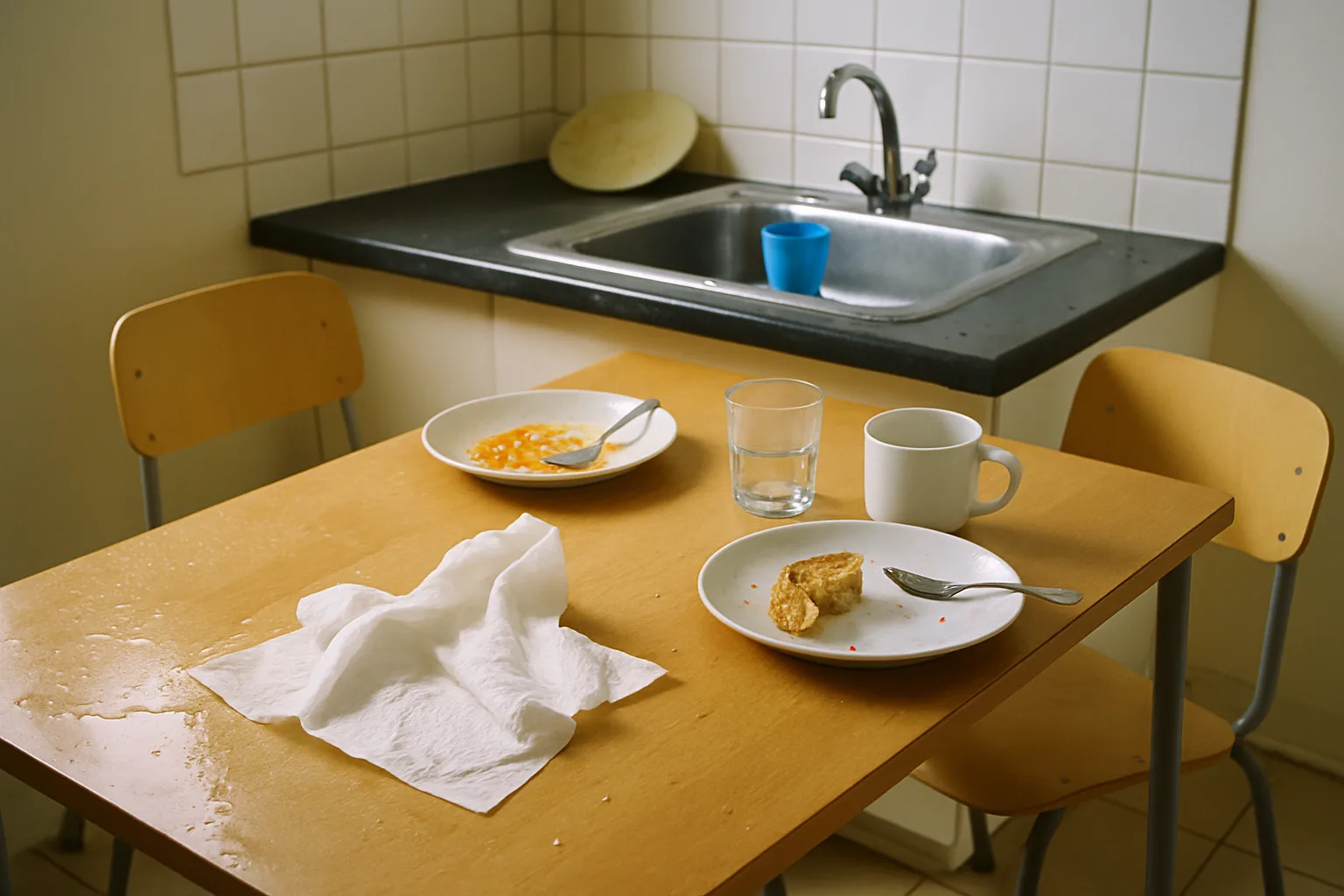
The fight started over the blue cup, which is embarrassing because we own eight cups and none of them are special. It was the cup my youngest wanted because my oldest had it. My oldest wanted it because he had poured the water already and, in his words, “I got here first.”
I was standing at the counter with one hand in a bag of pretzels, trying to get lunches packed, and I could feel myself already getting tired of the sound of their voices. Not their actual voices, I guess, but that sharp tone they both use when they decide the other one is the problem. It starts high and then gets higher until the whole kitchen feels smaller.
I did the thing I always tell myself not to do. I tried to solve it from across the room.
“Just pick another cup.”
Nobody picked another cup.
My youngest grabbed for it. My oldest pulled back. Water spilled across the table and onto the chair. Then my oldest yelled, “You always let him take my stuff,” which hit the exact nerve it always hits because I spend half my life trying not to be unfair and the other half being accused of it anyway.
I snapped. Not huge, not scary, but sharp enough that both of them stopped for a second.
“Enough. I am not doing this over a cup.”
That sentence did not help. It made me feel in charge for about three seconds, and then my youngest started crying because now the cup was wet and the chair was wet and apparently his socks were wet even though he was nowhere near the spill. My oldest folded his arms and stared at the floor with that look that means he is building a legal case against me in his head.
I wiped the table harder than necessary. That was probably the moment I noticed I wasn’t parenting the actual problem. I was parenting the noise. I wanted the noise to stop, and I wanted everyone to become reasonable immediately, which is a ridiculous thing to expect from two kids before school when I myself was mad at a plastic cup.
So I put the cup in the sink. That caused another wave of protest, but at least the object was gone.
I told them both to sit down. My oldest said, “Why am I in trouble?” My youngest said, “I didn’t even do anything,” while still crying. I said, “You’re not in trouble. I need the room to be calmer before we keep moving.”
I wish I could say I said it gently. I said it like someone trying very hard to sound calm and only partly succeeding.
The boundary I ended up setting was not about cups. It was, “You can be mad, but you can’t grab things out of each other’s hands.” Then, because I knew my oldest was still stuck on the fairness part, I added, “And if you have something first, I won’t make you give it up just because someone else is upset.”
That helped him a little. I saw his shoulders drop, which is how he forgives me without saying it.
For my youngest, the boundary was different. He was still crying and doing that boneless slide down the chair. I told him, “I won’t let you take it from him. You can ask for a turn, or you can choose another cup. If you scream at him, I’m going to move you to the hallway with me until your voice is not hurting everybody.”
He screamed, so I moved him to the hallway with me.
That part was not pretty. He kicked the baseboard once, not hard, more like a warning kick. I sat on the floor next to the shoe basket and said almost nothing because everything I said was making it worse. I tried, “I know you wanted it,” and he yelled, “No you don’t.” Fair. I did not want the cup. I wanted coffee and six quiet minutes.
After maybe four minutes, he climbed into my lap like the whole fight had been exhausting for him too. His cheek was hot against my neck. From the kitchen, my oldest called, “Can I still have water?” which made me laugh a little, but quietly, because laughing at the wrong time is its own disaster.
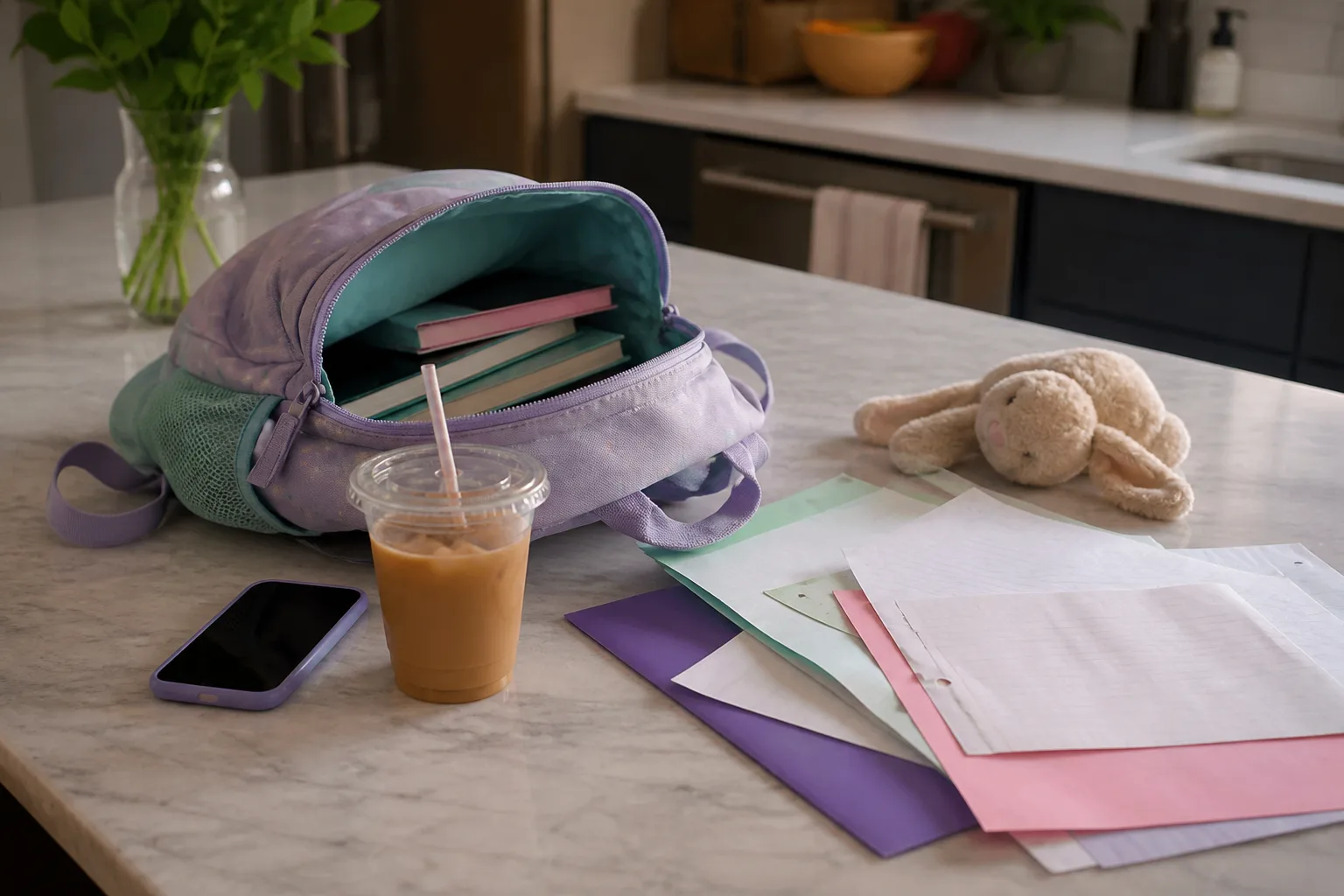
We went back in. I gave my oldest the blue cup, refilled. I gave my youngest a green one. He accepted it with deep resentment, like I had handed him a bill. I made them both help wipe the chair legs because the water had dripped down, and they did it badly, mostly smearing it around with paper towels.
Nobody apologized in the clean, TV-family way. My youngest muttered, “Sorry for grabbing,” while looking at the fridge. My oldest said, “It’s fine,” in a voice that meant it was not completely fine. Then five minutes later they were arguing about who got to zip the backpack, so it’s not like we entered a new era of peace.
But I thought about it later, after drop-off, sitting in the driveway with the empty coffee cup in the holder and the house finally quiet. The part that mattered wasn’t that I handled it perfectly, because I didn’t. I started irritated, I barked, I cared too much about being accused of unfairness. The part that stayed with me was that the boundary got clearer once I stopped trying to make everyone happy.
Inside our house, I think I sometimes confuse peace with everyone getting what they want. That morning, nobody really did. One kid kept the cup. One kid had to be mad and survive it. I had to stop performing calm and actually make a decision.
By dinner, the blue cup was back in the cabinet with all the other cups, looking stupidly innocent.