The argument started over a backpack.
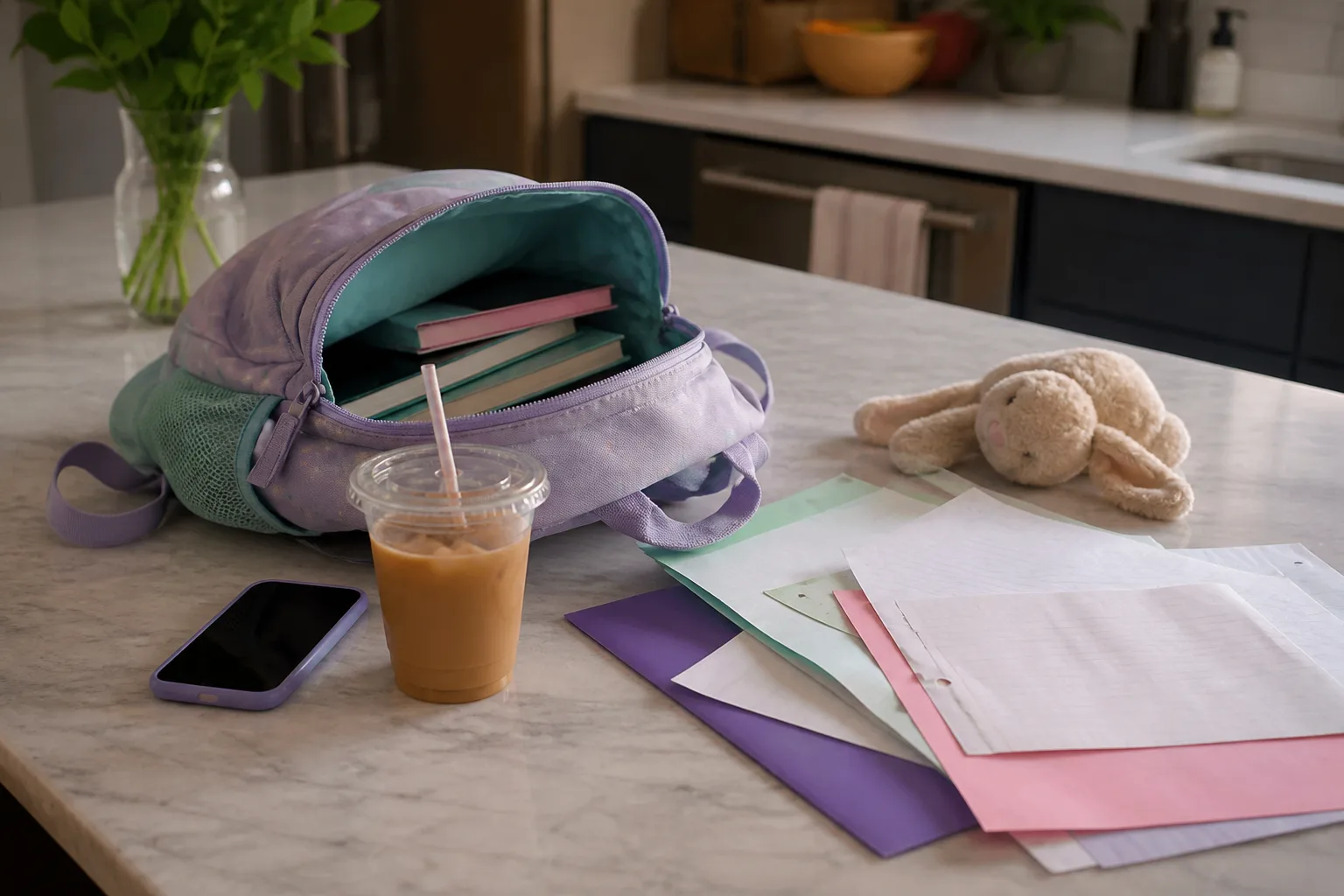
Not even the whole backpack, really. A folder inside it. A kid needed it for school, it was at the other house, and somehow that turned into standing in the kitchen early in the morning, phone in one hand, coffee going cold on the counter, trying to write a text that did not sound like an accusation even though it absolutely was one.
I typed, “Do you have the purple folder?” Then deleted it.
Typed, “The purple folder is needed today.” Deleted that too.
What I wanted to type was, “This is exactly why we need to check the backpack before transitions,” but I could already hear the reply in my head, and I knew it would become a whole thing before either of us had even started work.
So I wrote, “Hey, any chance the purple folder is over there?”
That was the version with the least blood in it.
Co-parenting has made me weirdly aware of how many tiny objects hold a family together. Water bottles. Cleats. Library books. Chargers. The sweatshirt she says is the only one that feels right. A stuffed cat named Miso that technically belongs to both houses because nobody wants to be the house where Miso is not.
A few months ago I got tired of the constant texts and started using a shared calendar app. I acted very mature about it. I sent the invite and wrote, “Maybe this will help keep everything in one place.” I did not write, “Maybe this will stop us from having the same conversation eighteen times.”
For about four days, I felt like I had discovered fire. Soccer practice was in there. Dentist appointment. Early dismissal. A note that said “bring blue dress for concert,” which felt almost elegant in its simplicity.
Then the app started doing what apps do, which is mostly reflect the people using them. I forgot to add pajama day. He added a birthday party but not the address. I put “school pictures” on the wrong Wednesday. At one point there were two separate entries for the same parent-teacher conference, both with different times, which felt too honest.
The calendar helped with facts, but it did not help with tone. It did not tell me when I was being controlling versus when I was being practical. It did not soften the part where I still sometimes read a neutral message like it has teeth.
The kids notice more than I want them to.
Kids read the tone long before they understand the logistics. They can tell the difference between two adults coordinating and two adults negotiating.
I laughed because it caught me off guard, and then I hated that I laughed. He had toothpaste foam on his chin and was looking at me in the mirror, not dramatic, just tired and curious. I told him, “Sometimes both.” Then I said, “But it’s not your job to figure it out.”
He nodded like he accepted the sentence, but accepting it is not the same thing as feeling it.
The worst moments are the handoffs where everyone is trying too hard. Shoes by the door, bags zipped, adults pleasant in that clipped way. “Hey.” “Hey.” “How was the weekend?” “Good.” The kids drift between us like little diplomats carrying blankets and snack containers.
Some handoffs go badly for reasons nobody planned. A kid stalls in the car, arms crossed, not crying, just finished with the whole arrangement for the day.
What is usually underneath it is simple. Switching houses is hard, and no calendar makes it less hard.
There was no fix for that in the app.
I sat in the passenger seat with the door open and one foot on the driveway. Her dad stood by the porch pretending not to listen, which was kind of him and also impossible. I said, “Yeah. I get that.”
She said, “You don’t have to switch.”
That one landed in my chest and stayed there.
I wanted to defend myself, explain adult choices, say something about how everybody was doing their best. Instead I said, “You’re right. I don’t.”
We sat there for maybe two minutes, which is a long time when someone is waiting on a porch and the engine is off and a child has just named the thing everyone keeps organizing around but not saying out loud.
Eventually she got out. She forgot her water bottle in the cup holder, because of course she did. I almost called after her, then stopped. Not everything has to be corrected immediately.
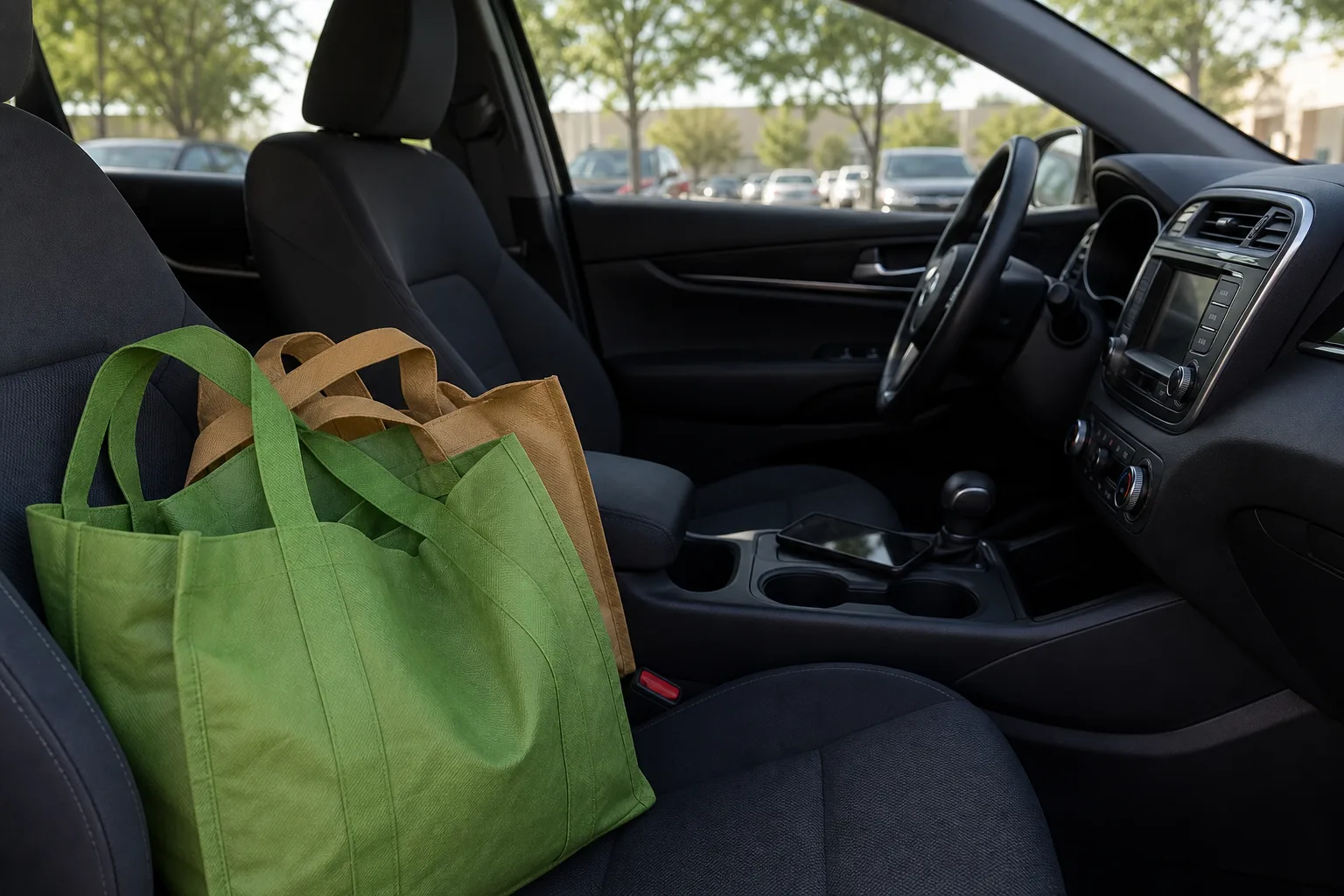
The purple folder did turn up. It was not at the other house at all. It was under the front seat of my car with two granola bar wrappers and one sock. I sent a text that said, “Found it in my car. Sorry.”
The reply was just, “All good.”
I wanted more than that, maybe because I had prepared for conflict and didn’t know where to put the leftover adrenaline. I wanted credit for apologizing. I wanted him to admit the system is hard. I wanted the whole thing to feel less stupid.
Instead I put the folder in her backpack and drove to school. She was quiet in the back seat, holding Miso by one paw. At the drop-off line, she leaned forward and said, “Can Miso come with me today?”
I started to say no because of rules, germs, lost items, all the parent math. Then I looked at the purple folder sticking out of the backpack, finally where it belonged for the next six hours, and said, “Keep him inside your bag.”
She smiled like I had handed her something much bigger than a stuffed cat.
The app is still on my phone. We still use it badly. There are still missing socks and half-annoyed texts and days when I can tell the kids are carrying the shape of both houses in their bodies. I keep thinking logistics will make it cleaner, and sometimes they do. But mostly they just give us a place to put the details while we keep dealing with the rest.